Tool 1.1 - The Macroscope
Macro-environment
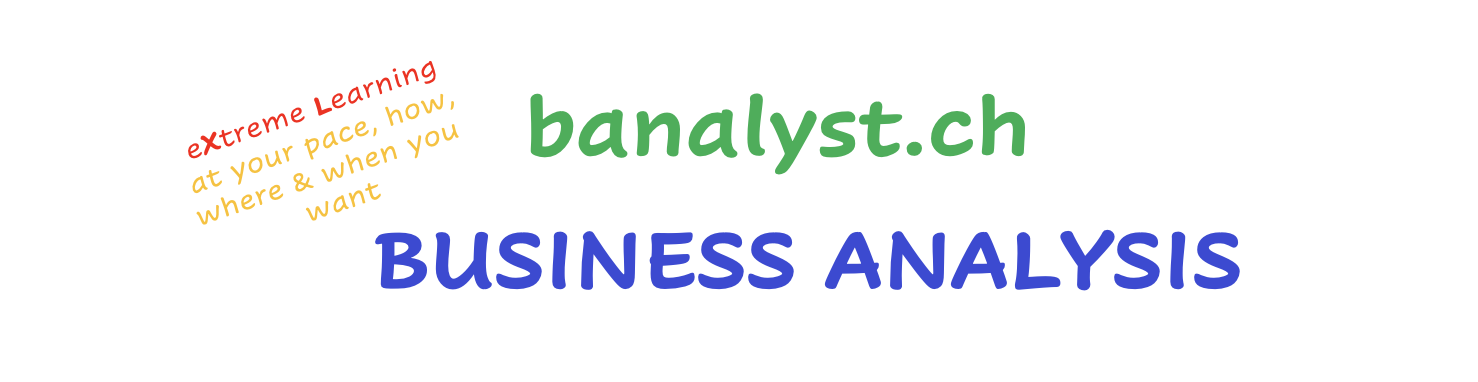
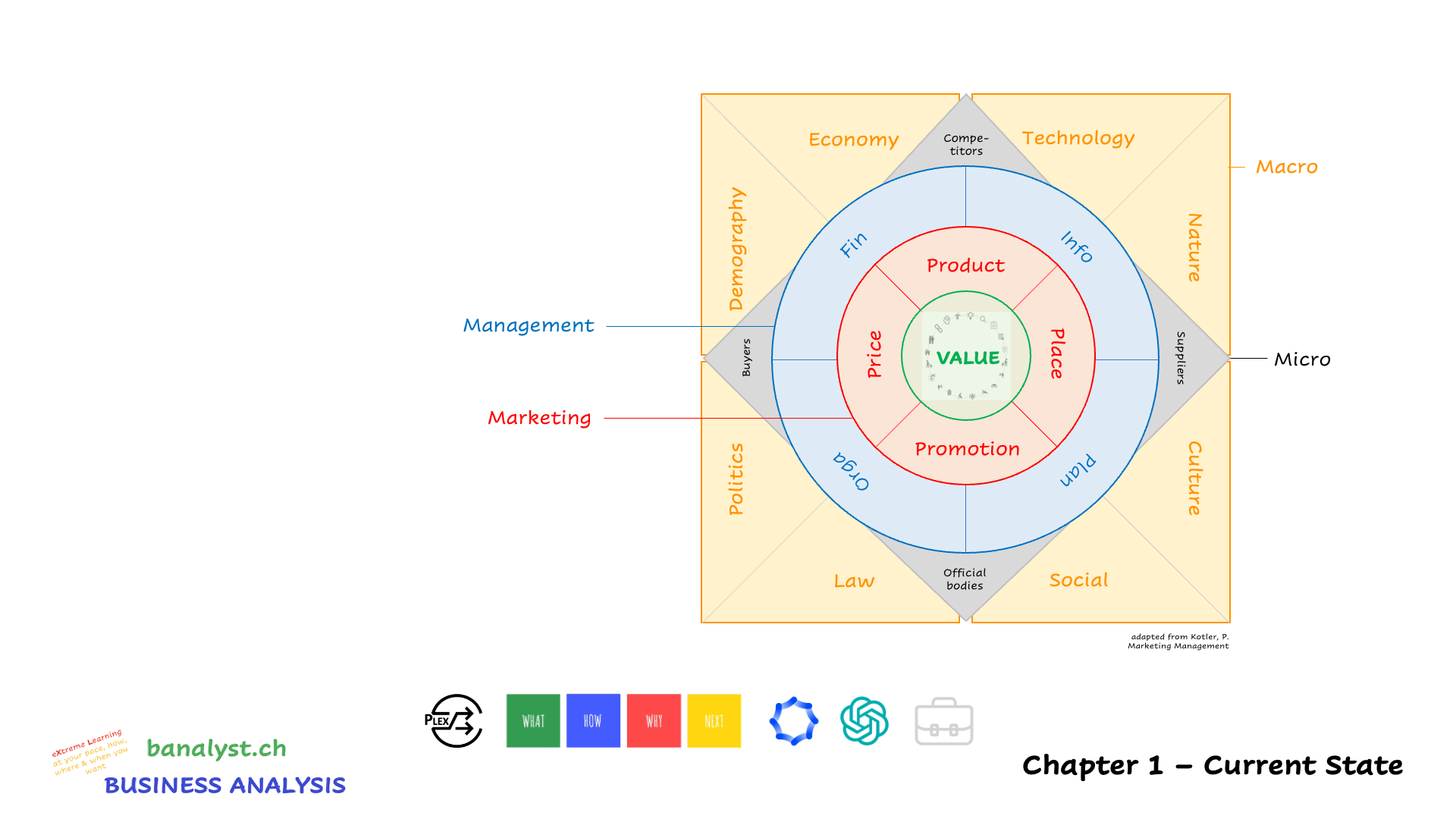
The macro-environment represents the broader forces affecting the actors in the microenvironment, encompassing demographic, economic, natural, technological, political, and cultural forces. These forces are considered uncontrollable and often require businesses to adapt rather than influence. In business analysis, this concept is also referred to as PESTEL, which stands for Political, Economic, Social, Technological, Environmental, and Legal factors that impact an organization's strategies and decision-making processes.
Micro-environment
The micro-environment encompasses the immediate actors involved in producing, distributing, and promoting the offering, namely the company, suppliers, distributors, customers, and competitors. This environment is where businesses can exercise a degree of control and where strategic relationships and value propositions are crafted. While not directly synonymous, the concept is related to Porter's Five Forces model, which analyzes a business's competitive environment through the forces of supplier power, buyer power, competitive rivalry, threat of substitution, and threat of new entry.
Management system
The management system refers to a set of procedures and processes used by an organization to ensure that it can fulfill all the tasks required to achieve its objectives. These systems often encompass aspects of planning, organization, personnel, and information technology—collectively known in business analysis as the POPIT model. This model recognizes the interconnectivity of these elements and emphasizes that changes in one area can affect the others.
Marketing system
The marketing system can be conceptualized as a framework for understanding and managing the marketing activities of an organization. It involves aligning the organization's marketing strategies with its overall business objectives and includes the identification of target customer segments, crafting of the value proposition, and the deployment of the four Ps (Product, Price, Place, Promotion). The Value Proposition Canvas, often used in business analysis, is a tool that helps businesses to ensure that the products or services they offer are positioned around what the customer values and needs.
The Macroscope
the interplay of a business's management and marketing systems involves a strategic alignment where management systems provide the structure and processes enabling the organization to effectively execute its strategies, while marketing systems focus on understanding customer needs, creating value propositions, and communicating offerings. The synergy between these systems allows a business to effectively respond to the micro-environment, addressing immediate stakeholder needs, and adapt to the macro-environment, navigating broader market forces. This strategic and operational alignment is also encapsulated in the Business Model Canvas, a tool used in business analysis to map out the key components of a business and how they work together to create and deliver value.
WHAT
This systemic view of a business illustrates the interconnected elements that a company must consider to operate effectively. At the center is the product and its value, surrounded by the marketing mix—the four Ps: Product, Price, Place, and Promotion. Encircling this are layers representing the micro-environment—factors like management, customers, and competitors that a business can influence directly. Beyond this is the macro-environment, encompassing broader societal forces like the economy, demographics, and technology that a business must adapt to but cannot control. It's crucial for business analysts to have the ability to 'zoom in' on the micro-environment for detailed strategy execution, and 'zoom out' to the macro-environment to understand and anticipate external factors affecting the business landscape.
HOW
-
Start with the Product: Identify the core product or service your business offers. Understand its features, benefits, and the value it brings to customers.
-
Assess the Four Ps:
- Product: Look at the quality, design, branding, and other attributes.
- Price: Determine your pricing strategy and how it compares to competitors.
- Place: Consider the distribution channels through which your product reaches customers.
- Promotion: Evaluate the methods used to promote the product, such as advertising, sales promotions, and social media.
-
Analyze the Micro-Environment:
- Management: Examine how your company's management and organizational structure support the product and its marketing.
- Other Micro Factors: Include suppliers, distributors, customers, and competitors. Analyze how they influence your product and marketing.
-
Examine the Macro-Environment:
- Look at the larger forces that affect your business which you can't control but can adapt to. These include demographic, economic, natural, technological, political, and cultural factors.
-
Zoom In and Out:
- Practice moving from the specific details of the product and its marketing (zooming in) to the broader context of the macro-environment (zooming out). This will help you understand how different elements affect your business and strategy.
-
Use Tools like the Business Model Canvas:
- To structure your analysis, use frameworks like the Business Model Canvas. This will help you visualize and connect all parts of your business system.
-
Synthesize and Strategize:
- Integrate all insights to identify strategic opportunities and threats. Create actionable plans to leverage strengths and address weaknesses in your business model.
Remember, the key is to see the business as a system where everything is connected. Changes in one part can have ripple effects throughout, so always consider the bigger picture when making decisions.
WHY
Understanding the relationships between all dimensions of the macroscopic levels is crucial for several reasons:
-
Strategic Decision-Making: A thorough comprehension of these dimensions allows you to make informed strategic decisions. You'll be able to foresee how a change in one area, like technology, can impact your marketing strategy or product development.
-
Value Creation: By understanding these relationships, you can identify where the greatest value can be created for your customers. For example, economic trends may influence the pricing strategy, or cultural shifts might impact product design.
-
Risk Management: A systemic view helps in anticipating risks. If you’re aware of how political regulations can affect your supply chain, you can devise contingency plans to mitigate those risks.
-
Innovation: Recognizing how different levels interact can inspire innovative solutions that bridge gaps or capitalize on emerging trends, keeping your business ahead of the curve.
-
Competitive Advantage: Understanding these complex interdependencies can provide a competitive edge. It enables you to align your business operations with the macro-environment effectively, resulting in a more resilient and adaptable business model.
In summary, this comprehensive knowledge ensures that business analysts can contribute to building a business that not only survives but thrives by adapting to and capitalizing on the dynamic interplay of its environment.
NEXT
When the results of a systemic vision are applied to a business analysis report, it fundamentally influences the structure and content of the entire document:
-
Executive Summary: This section will encapsulate the interconnectedness of the business's micro and macro environments, succinctly presenting the overarching strategy derived from a systemic understanding.
-
Current State Analysis: Here, the report will detail how each element of the micro-environment, such as management, customers, and competitors, and the macro-environment, like economic and cultural factors, currently affects the business.
-
Market Analysis: The systemic vision will inform the analysis of the market, showing how external forces shape market trends and competitive landscape, impacting the business's market position.
-
SWOT Analysis: The Strengths, Weaknesses, Opportunities, and Threats will be identified not in isolation but as they relate to the broader system, emphasizing how internal capabilities align with external possibilities and challenges.
-
Requirements Definition: By understanding the systemic relationships, the report will define business requirements that are robust and take into account the full spectrum of business influences.
-
Strategy and Recommendations: Strategies will be crafted with a clear understanding of how different aspects of the business and its environment interact, ensuring that recommendations are comprehensive and aligned with both internal and external factors.
-
Implementation Plan: The plan will recognize the dependencies and interactions between various business functions and external factors, ensuring that the implementation is realistic and considers potential systemic impacts.
-
Risk Analysis and Contingency Planning: Risks will be identified in the context of the business’s systemic interactions, with contingency plans that address the potential cascading effects of those risks.
-
Financial Analysis: The financial implications will be projected, taking into account the systemic interactions that could affect costs, revenues, and profitability.
By integrating the systemic vision into every chapter, the report provides a holistic view of the business and its environment, ensuring that all recommendations are made with an understanding of the complex interplay of factors that can impact the business's success.
PROMPT
[case]
In a bustling city center, a well-established hotel renowned for its impeccable service and luxurious amenities faces an unexpected challenge that threatens its reputation for excellence. Despite the hotel's efforts to provide a seamless experience, a growing number of guests have expressed dissatisfaction with the check-in process, particularly the requirement to complete paper arrival forms. This practice, seemingly anachronistic in the digital era, has sparked a wave of complaints among patrons accustomed to more modern, efficient, and environmentally friendly approaches to service. The hotel, nestled in a historic building, prides itself on blending traditional charm with contemporary comfort. However, this incident has highlighted a critical disconnect between the hotel's esteemed heritage and the evolving expectations of its clientele. Guests, ranging from business travelers to vacationing families, have voiced their frustrations on various platforms, including social media, review websites, and direct feedback to hotel staff. The sentiment is clear: the outdated check-in procedure undermines the otherwise stellar experience offered by the hotel. The management team, taken aback by the intensity and volume of the feedback, recognizes the urgent need to address this issue. The situation calls for a comprehensive examination of the check-in process, with the goal of identifying a solution that aligns with the hotel's commitment to excellence while embracing technological advancements. This endeavor is not just about enhancing a single operational aspect but is indicative of the hotel's broader challenges in adapting to the digital transformation reshaping the hospitality industry.
[instruction]
Based on the [case] above, do a global MACROSCOPE analysis. Find the most relevant element for each dimension of a macroscope map. Return the result as a [macroscope] list with the following structure:
[macroscope]
[value proposition]
[marketing]
[product]
[price]
[place]
[promotion]
[management]
[information]
[planning]
[organization]
[finance]
[micro]
[buyers]
[suppliers]
[competitors]
[official bodies]
[macro]
[economy]
[demography]
[technology]
[nature]
[culture]
[society]
[law]
[politics]
CREDITS
Course : Business Analysis & Requirements Engineering
Institution : HES-SO Valais Wallis, 3960 Sierre
Teachers : Thomas Steiner & Catherine Tacchini
Credits
- FTO : X.XX ECTS
- FIG : X.XX ECTS
Objectives (with Babok 3 chapters)
- I understand elicitation scope. (4.1.4.1)
- I understand selecting appropriate elicitation techniques. (4.1.4.2)
- I follow rules to set up logistics for elicitation activities. (4.1.4.3)
- I understand preparing supporting elicitation materials. (4.1.4.4)
- I understand guiding the elicitation activity. (4.2.4.1)
- I follow rules to capture the outcomes of the elicitation activity. (4.2.4.2)
- I understand communicating the appropriate level of detail. (4.4.4.2)
- I have applied the MACROSCOPE (business case)
EXPLAINED
video exlanations follow
VALUE
In business analysis, value is a central concept that encapsulates the benefits, worth, or usefulness of a product or service to stakeholders within a context. It is subjective and varies based on individual client or user perceptions, which can be represented through the concept of Personas, helping to tailor solutions to meet diverse needs and expectations. Objectively, value translates into a company's processes, marketing, and management systems, necessitating careful planning and execution that culminate in financial flows, reflecting the tangible impact of value on the business's economic health.
PLEX
A PLEX, or Peer LEarning eXperience, is a self-contained, micro-learning unit created by students or teachers, designed to answer key questions like 'what?', 'how?', 'why?', and 'what's next?'. Each PLEX clearly outlines its learning objectives, associated micro-credits, and provides details about its original authors and their affiliations, making it a versatile resource for integration into various learning environments.
Recommended reading : DeRosnay, J. Le macroscope. Vers une vision globale. Points Sciences, 2014.
Tool 1.2 - TEX - the Tourism EXperience wheel
Personas
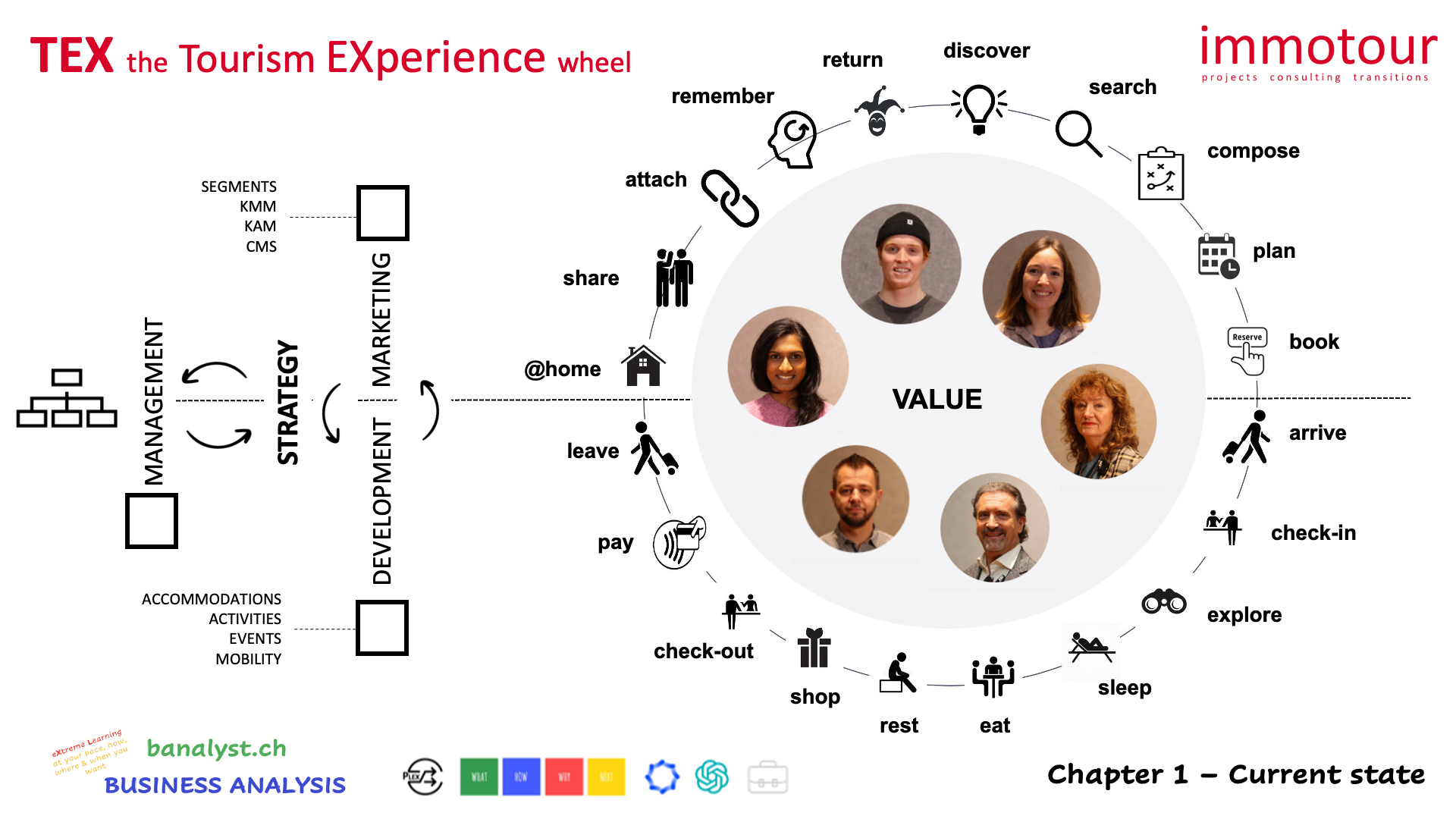
Tourism personas are fictional characters that represent different segments of tourists. They are created based on research and data to embody the varying needs, behaviors, preferences, and motivations of tourists. By understanding these personas, tourism professionals can tailor their services, marketing, and product development to better meet the specific desires of each group. This personalized approach enhances the tourism experience, leading to greater satisfaction and potentially increased business for tourism providers.
Pre-stay experience
The Pre-Stay phase of the tourism experience, located in the upper right part of the experience wheel above the dotted line, encompasses all activities and interactions a tourist engages in before arriving at their destination. This includes discovering, searching, planning, composing, and booking their trip. It's a crucial stage where expectations are set and initial impressions are formed.
Post-stay experience
The Post-Stay experience, in the upper left part of the wheel, involves activities after the tourist has left the destination. This includes sharing experiences, reviewing services, and reflecting on the trip. This phase is essential for feedback, fostering long-term relationships, and influencing future travel decisions through shared experiences and reviews.
During-stay experience
The During-Stay phase, situated in the lower part of the experience wheel below the dotted line, is the core of the tourism experience. It encompasses all the activities and interactions a tourist has while they are at the destination. This includes arrival, exploration, accommodation, dining, shopping, and participation in events or activities. This phase is critical for fulfilling the expectations set during the pre-stay period and creating memorable experiences that could influence future travel decisions and recommendations.
Development strategy
A tourism development strategy focuses on enhancing the tourist's experience at the destination by improving infrastructure, services, and activities. This strategy aims to ensure that the tourists' needs and expectations are met, leading to increased satisfaction, positive reviews, and repeat visits. It includes managing accommodations, events, local attractions, and other key aspects that directly impact the tourist's experience during their stay.
WHAT
The Tourism Experience Wheel illustrates how value is added at each stage of a tourist's journey. In the Pre-Stay phase, value comes from efficient planning and anticipation, enhancing excitement. During-Stay focuses on the actual experiences, where the quality of services and interactions directly impacts satisfaction. Post-Stay adds value through reflection and sharing, influencing future decisions and wider perceptions. This model underscores the cumulative effect of each phase on the overall value, highlighting the importance of a seamless, enriching journey for long-term success in the tourism industry.
HOW
When working with the Tourism Experience Wheel, focus on each phase - Pre-Stay, During-Stay, Post-Stay - to understand how they contribute to the overall tourist experience. Analyze customer interactions and touchpoints in each phase to identify improvement opportunities. Use customer feedback and data to refine services and offerings in each stage. Consider how each phase influences the next, emphasizing a seamless transition for continuous value addition. Lastly, apply this holistic view in strategic planning to enhance overall customer satisfaction and business success in tourism.
WHY
Establishing a Tourism Experience Wheel aids in comprehensively understanding the customer journey in tourism. It enables a structured analysis of different stages of a tourist's experience, from planning to post-trip. This approach helps identify specific needs and preferences at each stage, guiding targeted improvements. It also facilitates the integration of various aspects of tourism management, ensuring a cohesive strategy. Additionally, the wheel provides a framework for continuous evaluation and adaptation to changing tourist behaviors and market trends.
NEXT
When the results of a tourism experience wheel are applied to a business analysis report, it fundamentally influences the structure and content of the entire document:
- Introduction (1.3 Methodology and approach): Explain how the Tourism Experience Wheel was used as part of the research methodology.
- Problem Statement (2.2 Root cause analysis): Use insights from the wheel to identify underlying causes of issues in the tourism experience.
- Market and Industry Analysis (3.1 Market overview and trends): Discuss trends and behaviors observed through the wheel.
- Customer Analysis (4.1 Customer segments and profiles; 4.2 Customer needs and pain points; 4.3 Customer behavior and preferences): Detail different tourist profiles, needs, and behaviors identified.
- SWOT Analysis (5.1 Strengths; 5.2 Weaknesses; 5.3 Opportunities; 5.4 Threats): Align strengths, weaknesses, opportunities, and threats with insights from the wheel.
- Solution Options (6.3 Recommendation and justification): Base recommendations on findings from the wheel analysis.
- Business Case Development (7.3 Risk assessment and management): Assess risks identified through the wheel.
- Conclusion (10.1 Summary of findings and recommendations): Summarize key insights from the wheel analysis and their implications.
PROMPT
[instruction]
Based on the [case] and the [macroscope] above, do a Tourism Experience analysis. Stay factual. Find the elements of the tourist value chain that are directed by the [value proposition] of the [macroscope] above. If an element of the value chain is not directly affected by the [value proposition] of the [macroscope], cite it in the list but leave it empty. Return the result as a [experience] list with the following structure:
[experience]
[pre]
[discover]
[search]
[compose]
[plan]
[book]
[stay]
[arrive]
[check-in]
[explore]
[sleep]
[eat]
[rest]
[shop]
[check-out]
[pay]
[leave]
[post]
[home]
[share]
[attach]
[remember]
[return]
CREDITS
Course : Business Analysis & Requirements Engineering
Institution : HES-SO Valais Wallis, 3960 Sierre
Teachers : Thomas Steiner & Catherine Tacchini
Credits
- FTO : X.XX ECTS
- FIG : X.XX ECTS
Objectives (with Babok 3 chapters)
- I understand elicitation scope. (4.1.4.1)
- I understand selecting appropriate elicitation techniques. (4.1.4.2)
- I follow rules to set up logistics for elicitation activities. (4.1.4.3)
- I understand preparing supporting elicitation materials. (4.1.4.4)
- I understand guiding the elicitation activity. (4.2.4.1)
- I follow rules to capture the outcomes of the elicitation activity. (4.2.4.2)
- I understand communicating the appropriate level of detail. (4.4.4.2)
- I have applied the TEX tourism experience wheel (business case)
Marketing strategy
A tourism marketing strategy, relating to the upper parts of the experience wheel above the dotted line, focuses on attracting and engaging potential tourists during the Pre-Stay and Post-Stay phases. It involves creating appealing promotional materials, effective online presence, and leveraging social media and reviews to build interest and trust. This strategy is pivotal for shaping perceptions, influencing travel decisions, and encouraging repeat visits, thus playing a crucial role in the overall success of a tourism destination.
Organizational strategy
A tourism organization strategy integrates development and marketing strategies into practical structures like tourism offices and regional bodies. It ensures that the physical and organizational infrastructure aligns with the overarching goals of development and marketing. While structures usually follow marketing, and marketing typically follows development, there is a cyclical interaction and ongoing updates between these strategies. This dynamic approach allows for adaptability and responsiveness to changing market demands and tourism trends, ensuring a cohesive and effective tourism experience.
PLEX
A PLEX, or Peer LEarning eXperience, is a self-contained, micro-learning unit created by students or teachers, designed to answer key questions like 'what?', 'how?', 'why?', and 'what's next?'. Each PLEX clearly outlines its learning objectives, associated micro-credits, and provides details about its original authors and their affiliations, making it a versatile resource for integration into various learning environments.
Tool 1.3 - Team Alignment Map
Recommended reading : Mastrogiacomo, S. & A. Osterwalder. High Impact Tools for Teams : 5 Tools to Align Team Members, Build Trust and Get Results Fast. Wiley, 2021