Tool 2.1 - PESTEL
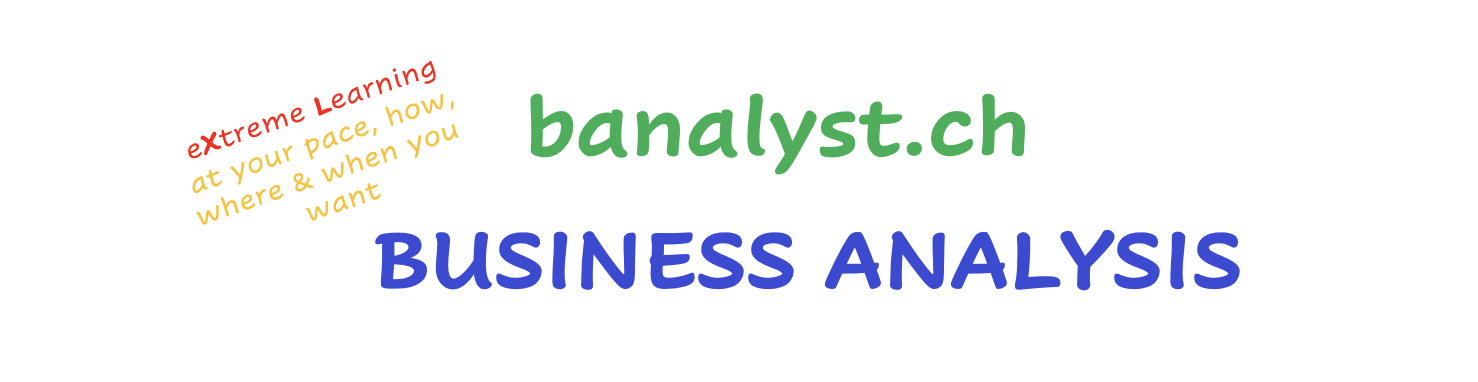
Political
Examine how government actions and political stability impact an industry or business. It includes factors like government policies, trade regulations, and political stability or instability in a specific region.
Economic
Focus on the economic environment in which a business operates, considering factors such as economic growth, exchange rates, inflation, and interest rates. It assesses how these economic factors can affect a company's performance and decision-making processes.
Social
Explore how societal trends and demographics, such as population growth, age distribution, cultural norms, and lifestyle changes, can influence a business or market. This dimension helps in understanding consumer needs and preferences, which can significantly impact market demand and business strategies.
Technological
Examine the impact of technological advancements and trends on a business, including the emergence of new technologies, the rate of technological innovation, and changes in technology-related regulations. This dimension helps businesses understand potential opportunities or threats posed by technological changes in their industry.
Environmental
Address how environmental factors, such as climate change, environmental regulations, and sustainability trends, affect a business or industry. It includes examining the impact of ecological changes and the increasing importance of environmental responsibility on business practices and regulatory compliance.
Legal
Explore the impact of legal factors on a business, including laws, regulations, and legal changes in areas like employment, health and safety, and competition. Understanding this dimension helps businesses navigate legal complexities and compliance requirements that can significantly affect their operations and strategic planning.
WHAT
PESTEL is an analytical framework used in business analysis to systematically evaluate the external factors impacting an organization. It stands for Political, Economic, Social, Technological, Environmental, and Legal dimensions, each representing a different type of external influence. This tool helps business analysts understand how various external elements can affect an industry or a specific business, guiding strategic planning and decision-making. For instance, analyzing political factors involves looking at government policies and stability, while economic factors include considering inflation rates and economic growth. Overall, PESTEL analysis is crucial for identifying opportunities and threats in the business environment, essential for strategic management and market research.
HOW
When conducting a PESTEL analysis, start by systematically exploring each of the six dimensions—Political, Economic, Social, Technological, Environmental, and Legal—to understand their impact on your business or industry. For each dimension, gather relevant data and information from credible sources like industry reports, government publications, and academic journals to ensure your analysis is well-informed and accurate. Pay close attention to current trends and potential future changes in each area, as these can reveal significant opportunities and threats for your business. It's important to analyze how these factors interconnect and influence each other, as the impact in one area can often spill over into another. Finally, regularly update your PESTEL analysis to reflect changing external conditions, as this tool is most effective when it's used as a dynamic part of your ongoing strategic planning process.
WHY
A PESTEL analysis is crucial for business analysis because it offers a comprehensive view of the external environment that can affect an organization's strategies and operations. By examining Political, Economic, Social, Technological, Environmental, and Legal factors, students can identify potential opportunities and threats that might not be immediately apparent. This analysis helps in understanding the broader macro-environmental context in which a business operates, leading to more informed and strategic decision-making. It also encourages a proactive approach, allowing businesses to anticipate changes in the external environment and adapt accordingly. Additionally, a thorough PESTEL analysis can provide a competitive edge, as it helps in understanding and responding to external factors better than competitors.
NEXT
The results of a PESTEL analysis can be integrated into various sub-chapters of a business analysis report. In section 3, "Market and Industry Analysis," the Political, Economic, Social, Technological, Environmental, and Legal insights can provide context for the "Market overview and trends" and "Industry analysis" sub-chapters, helping to understand external factors affecting the market and industry. In section 5, "SWOT Analysis," the Opportunities and Threats identified through PESTEL can be directly incorporated, as external factors from PESTEL often translate into opportunities and threats for the business. The "Impact and consequences" sub-chapter in section 2, "Problem Statement," can also benefit from PESTEL analysis by showing how external factors contribute to or exacerbate the defined problem. Lastly, the "Risk assessment and management" part of section 7, "Business Case Development," can utilize the insights from PESTEL to identify potential risks in the external environment and propose mitigation strategies.
PROMPT
[case]
In a bustling city center, a well-established hotel renowned for its impeccable service and luxurious amenities faces an unexpected challenge that threatens its reputation for excellence. Despite the hotel's efforts to provide a seamless experience, a growing number of guests have expressed dissatisfaction with the check-in process, particularly the requirement to complete paper arrival forms. This practice, seemingly anachronistic in the digital era, has sparked a wave of complaints among patrons accustomed to more modern, efficient, and environmentally friendly approaches to service. The hotel, nestled in a historic building, prides itself on blending traditional charm with contemporary comfort. However, this incident has highlighted a critical disconnect between the hotel's esteemed heritage and the evolving expectations of its clientele. Guests, ranging from business travelers to vacationing families, have voiced their frustrations on various platforms, including social media, review websites, and direct feedback to hotel staff. The sentiment is clear: the outdated check-in procedure undermines the otherwise stellar experience offered by the hotel. The management team, taken aback by the intensity and volume of the feedback, recognizes the urgent need to address this issue. The situation calls for a comprehensive examination of the check-in process, with the goal of identifying a solution that aligns with the hotel's commitment to excellence while embracing technological advancements. This endeavor is not just about enhancing a single operational aspect but is indicative of the hotel's broader challenges in adapting to the digital transformation reshaping the hospitality industry.
[instruction]
Based on the [case] above, do a PESTEL analysis. Find at least 5 elements for each of the dimensions policital, economic, social, technological, environmental, legal. Return the result as a structured [pestel] list with for each dimension an indented section between [] for example [political] and then the elements listed as bullet points, followed by the next section.
CREDITS
Course : Business Analysis & Requirements Engineering
Institution : HES-SO Valais Wallis, 3960 Sierre
Teachers : Thomas Steiner & Catherine Tacchini
Credits
- FTO : X.XX ECTS
- FIG : X.XX ECTS
Objectives (with Babok 3 chapters)
- I understand elicitation scope. (4.1.4.1)
- I understand selecting appropriate elicitation techniques. (4.1.4.2)
- I follow rules to set up logistics for elicitation activities. (4.1.4.3)
- I understand preparing supporting elicitation materials. (4.1.4.4)
- I understand guiding the elicitation activity. (4.2.4.1)
- I follow rules to capture the outcomes of the elicitation activity. (4.2.4.2)
- I understand communicating the appropriate level of detail. (4.4.4.2)
- I have applied PESTEL. (case study)
EXPLAINED
Video explanations follow
PLEX
A PLEX, or Peer LEarning eXperience, is a self-contained, micro-learning unit created by students or teachers, designed to answer key questions like 'what?', 'how?', 'why?', and 'what's next?'. Each PLEX clearly outlines its learning objectives, associated micro-credits, and provides details about its original authors and their affiliations, making it a versatile resource for integration into various learning environments.
Tool 2.2 - SWOT
STRENGTHS
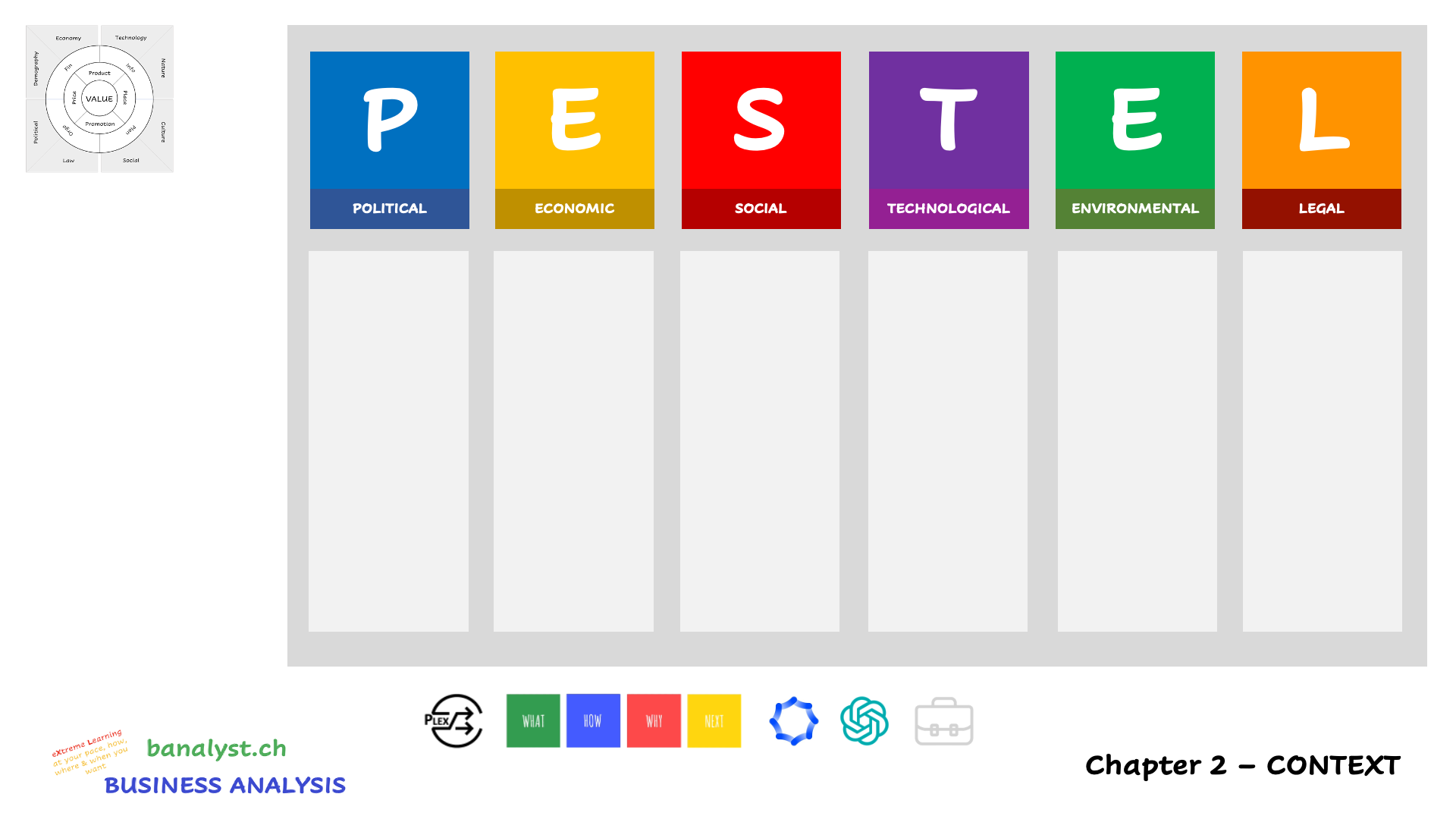
Strengths in a SWOT analysis are the unique internal capabilities and resources of a business that give it an advantage in the market, such as expert personnel, intellectual property, or efficient processes. These strengths originate from the company's internal (micro) environment and are key drivers of value creation. By capitalizing on these strengths, a business can enhance its value proposition and secure a competitive position.
WEAKNESSES
Weaknesses in a SWOT analysis represent the internal limitations or deficiencies within a company that can hinder its performance or strategic goals. Originating from the company's internal (micro) environment, these weaknesses could manifest as inadequate research and development facilities, outdated technology, or a weak brand image. They lead to 'pains' that detract from the company's value, potentially causing loss of market position, financial underperformance, or a negative perception among customers.
OPPORTUNITIES
Opportunities in a SWOT analysis are external factors or trends that the business can exploit to its advantage, such as emerging markets, regulatory changes, or shifts in consumer preferences. These opportunities arise from the external (macro) environment and are not within the company’s immediate control, yet they can be leveraged for significant gains. Capitalizing on these opportunities can lead to enhanced value.
THREATS
Threats in a SWOT analysis are external challenges that could negatively impact the business, such as competitive pressures, changing regulations, or economic downturns. These threats stem from the external (macro) environment and can result in 'pains' that diminish the company's value proposition. It's crucial for businesses to identify and monitor these threats to mitigate potential adverse effects on their operations and long-term goals.
Link to the micro-environment
Strengths and Weaknesses in a SWOT analysis are discerned by examining the micro-environment of a business, which involves a detailed, microscopic view of internal factors such as company culture, operational efficiency, and financial resources. This introspective analysis helps to identify the internal factors that a company excels in or lacks, representing its Strengths and Weaknesses, respectively. By closely analyzing these micro-environmental aspects, businesses can understand their intrinsic capabilities and areas for improvement within the broader macroscopic market context.
Link to the macro-environment
Opportunities and Threats are identified by examining the macro-environment, which requires a broader, macroscopic view of external factors that affect the business landscape, such as economic trends, social changes, and technological advancements. This wide-angle perspective, often informed by a PESTEL analysis, helps in recognizing external conditions that can be leveraged as opportunities or that may pose potential threats. The PESTEL analysis delves into Political, Economic, Social, Technological, Environmental, and Legal dimensions of the macro-environment, offering insights that are critical for a comprehensive SWOT evaluation.
WHAT
SWOT Analysis is a crucial framework in business analysis. SWOT stands for Strengths (internal advantages), Weaknesses (internal limitations), Opportunities (external growth possibilities), and Threats (external risks and challenges). It helps businesses evaluate their current position and make informed decisions for strategic planning. Identify strengths and weaknesses within your organization and seize opportunities while mitigating threats for a competitive edge.
HOW
- Strengths: List internal advantages such as skills, resources, and expertise.
- Weaknesses: Identify internal limitations, like resource constraints or skill gaps.
- Opportunities: Explore external growth factors using PESTEL analysis, insert and complete them here.
- Threats: Assess external risks and challenges with PESTEL analysis, insert and complete them here.
WHY
SWOT is vital in business analysis because it provides a structured way to:
- Assess Current Position: Understand your business's strengths, weaknesses, opportunities, and threats.
- Strategic Planning: Helps in strategic decision-making, enabling you to leverage strengths, address weaknesses, capitalize on opportunities, and mitigate threats.
- Risk Mitigation: Identifies potential risks and challenges, allowing proactive risk management.
- Competitive Advantage: Helps in gaining a competitive edge by aligning strategies with your internal and external environment.
- Adaptability: Promotes adaptability by allowing you to revisit and adjust your strategies as conditions change, fostering long-term success.
NEXT
Here is a detailed breakdown of how the SWOT analysis can directly and indirectly influence each chapter of the business analysis report:
-
Introduction (1):
- Directly: The SWOT analysis can provide insights into the background and context by highlighting key internal and external factors influencing the organization.
- Indirectly: It helps set the stage for the report's purpose and scope by identifying potential areas of concern or opportunities that may need to be addressed.
-
Problem Statement (2):
- Directly: SWOT findings can contribute to the definition of the problem by pinpointing weaknesses and threats that may have led to the issue.
- Indirectly: It can help identify the root causes and consequences more accurately.
-
Market and Industry Analysis (3):
- Directly: SWOT's external factors (Opportunities and Threats) can inform the market overview, trends, competition, and industry analysis.
- Indirectly: Strengths and Weaknesses can indirectly influence the understanding of market positioning and competitive advantages.
-
Customer Analysis (4):
- Directly: SWOT's findings on customer needs and preferences (Strengths and Weaknesses) can inform the understanding of customer segments and profiles.
- Indirectly: Opportunities and Threats can influence customer behavior and preferences by identifying external factors impacting customers.
-
SWOT Analysis (5):
- This section itself is dedicated to presenting the SWOT analysis results, highlighting the organization's internal strengths and weaknesses, as well as external opportunities and threats.
-
Solution Options (6):
- Directly: SWOT's insights can be used to evaluate alternative solutions by assessing how they align with strengths, address weaknesses, capitalize on opportunities, or mitigate threats.
-
Business Case Development (7):
- Directly: The SWOT analysis can inform the risk assessment and management section by identifying potential risks (Threats) and areas where strengths can be leveraged for risk mitigation.
- Indirectly: It can influence cost-benefit analysis by identifying potential cost-saving opportunities or revenue-generating strengths.
-
Implementation Plan (8):
- Directly: SWOT findings can influence resource and budget requirements by highlighting areas where investments may be needed to address weaknesses or seize opportunities.
-
Requirements (9):
- Directly: SWOT analysis can inform functional requirements and priorities by identifying areas of strength that should be maintained and weaknesses that need improvement.
-
Conclusion (10):
- Directly: The SWOT analysis can contribute to the summary of findings and recommendations by providing a concise overview of key internal and external factors affecting the organization's strategic direction.
- Indirectly: It can influence implications and next steps by suggesting potential strategies based on the SWOT analysis results.
In summary, the SWOT analysis plays a pivotal role throughout the business analysis report, both directly and indirectly, by informing various aspects of the analysis, recommendations, and strategic planning.
PROMPT
[instruction]
Based on the [case] and the [pestel] analysis done above, do a SWOT analysis. Find at least 5 elements for each of the dimensions strength, weaknesses, opportunities and threats. Return the result as a structured [swot] list with for each dimension an indented section between [] for example [strength] and then the elements listed as bullet points, followed by the next section.
CREDITS
Course : Business Analysis & Requirements Engineering
Institution : HES-SO Valais Wallis, 3960 Sierre
Teachers : Thomas Steiner & Catherine Tacchini
Credits
- FTO : X.XX ECTS
- FIG : X.XX ECTS
Objectives (with Babok 3 chapters)
- I understand elicitation scope. (4.1.4.1)
- I understand selecting appropriate elicitation techniques. (4.1.4.2)
- I follow rules to set up logistics for elicitation activities. (4.1.4.3)
- I understand preparing supporting elicitation materials. (4.1.4.4)
- I understand guiding the elicitation activity. (4.2.4.1)
- I follow rules to capture the outcomes of the elicitation activity. (4.2.4.2)
- I understand communicating the appropriate level of detail. (4.4.4.2)
- I have applied SWOT. (case study)
EXPLAINED
video explanations follow
PLEX
A PLEX, or Peer LEarning eXperience, is a self-contained, micro-learning unit created by students or teachers, designed to answer key questions like 'what?', 'how?', 'why?', and 'what's next?'. Each PLEX clearly outlines its learning objectives, associated micro-credits, and provides details about its original authors and their affiliations, making it a versatile resource for integration into various learning environments.
Tool 2.3 - Porter's 5 Forces
COMPETITIVE RIVALRY
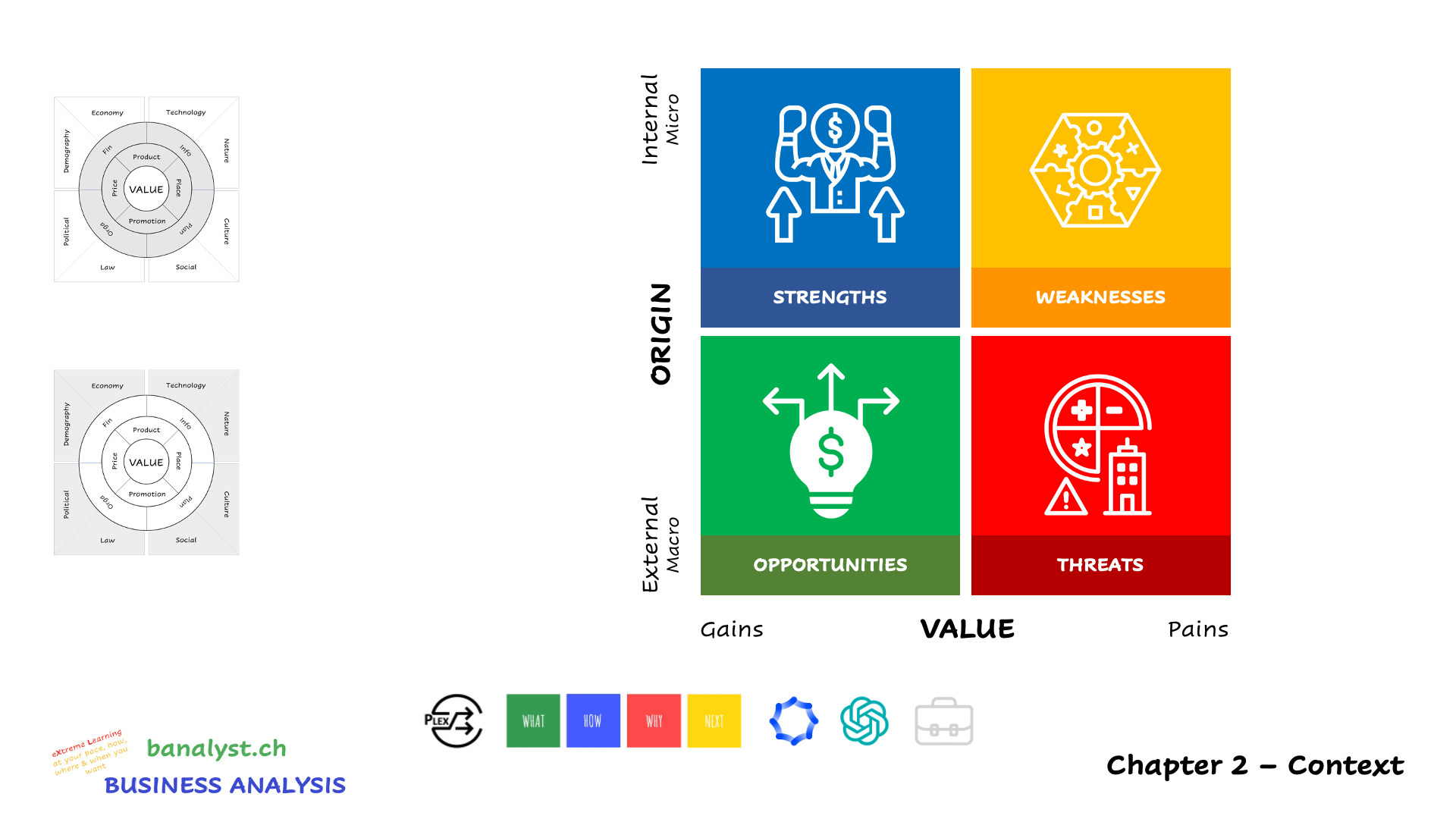
This force examines the intensity of the competition in the market. Factors include the number and capability of competitors, rate of industry growth, product or service characteristics (like brand identity and switching costs), and the degree of differentiation between competitors.
SUPPLIER POWER
This force analyzes how much power and control a business’s suppliers have over the potential to raise prices or reduce the quality of purchased goods or services. This power is influenced by the number of suppliers, the uniqueness of their products or services, their strength and control over you, and the cost of switching from one to another.
BUYER POWER
This force focuses on the power of customers to affect prices and quality. High bargaining power occurs when buyers have many choices of whom to buy from and low power when their choices are few. Factors influencing this power include buyer volume, the importance of each individual buyer to the organization, and the cost to the buyer of switching from one supplier to another.
THREAT OF NEW ENTRY
This force examines how easy or difficult it is for new competitors to enter the industry. Factors influencing this include barriers to entry, economies of scale, brand identity, regulations, and access to distribution channels.
Link to SWOT analysis
Porter's Five Forces and SWOT (Strengths, Weaknesses, Opportunities, Threats) analysis are complementary tools used in strategic planning. They provide different perspectives but can be interconnected to provide a comprehensive view of a company's strategic position.
- Threat of New Entrants (Porter) and Weaknesses (SWOT): If a company finds through Porter's analysis that there are low barriers to entry in their industry, this may be a weakness in the SWOT analysis. It suggests the company is vulnerable to new competitors entering the market.
- Bargaining Power of Suppliers (Porter) and Weaknesses (SWOT): High supplier power in Porter's analysis could be considered a weakness in SWOT. It can indicate a company's dependency on suppliers for quality materials, which can affect pricing and profitability.
- Bargaining Power of Buyers (Porter) and Weaknesses (SWOT): If buyers have significant power (e.g., due to market saturation or standardized products), this might be a weakness in the SWOT analysis, indicating the company's limited control over pricing and terms.
- Threat of Substitute Products (Porter) and Threats (SWOT): A high threat of substitutes in Porter's analysis can translate into a threat in SWOT. It shows the company's vulnerability to customers switching to alternative products or services.
- Competitive Rivalry (Porter) and Strengths or Weaknesses (SWOT): The level of competition within an industry in Porter's analysis can either be a strength or a weakness in SWOT. A strong competitive position could be a strength, while a weaker position could be a weakness.
- Opportunities (SWOT) and Porter’s Forces: In contrast to the weaknesses and threats, opportunities in SWOT can be identified by analyzing Porter’s forces. For example, if the threat of new entrants is low, it might be an opportunity to capitalize on the market with less fear of new competitors. Or, if supplier power is low, it might be an opportunity to negotiate better terms.
By integrating Porter's Five Forces analysis with a SWOT analysis, a company can develop a more robust and nuanced strategy. Porter's analysis offers a detailed examination of the industry's competitive structure, while SWOT focuses more on the company's internal strengths and weaknesses relative to external opportunities and threats. Together, they provide a comprehensive view of the external competitive environment and the internal capabilities of the company.
Link to the macro-environment
Porter's Five Forces and PESTEL analysis are both crucial tools in strategic planning, but they focus on different aspects of the business environment. While Porter's Five Forces is used to analyze the competitive dynamics within an industry, PESTEL analysis provides an overview of the broader macro-environmental factors that can impact an organization. The two frameworks complement each other and can be used together for a comprehensive analysis.
- Political Factors (PESTEL) and Porter's Five Forces: Government policies, political stability, and changes in regulation can influence all five of Porter's forces. For example, changes in trade policies or regulations could affect the threat of new entrants by making it easier or harder for foreign companies to enter the market. Similarly, labor laws can impact the bargaining power of suppliers.
- Economic Factors (PESTEL) and Porter's Five Forces: Economic trends such as inflation, exchange rates, and economic growth impact the competitive environment. For instance, economic downturns can intensify competitive rivalry as businesses fight for limited customer spending. Economic conditions can also affect the bargaining power of buyers and suppliers, as well as the threat of new entrants and substitutes.
- Social Factors (PESTEL) and Porter's Five Forces: Changes in social trends and consumer behaviors can influence the level of competitive rivalry, the threat of substitute products, and the bargaining power of buyers. For example, a growing interest in sustainability might increase the demand for eco-friendly products, affecting competitive strategies.
- Technological Factors (PESTEL) and Porter's Five Forces: Technological advancements can significantly impact an industry’s competitive environment. New technologies can lower barriers to entry, increase the threat of substitution, and change the basis of competition. They can also shift the power balance between buyers and suppliers.
- Environmental Factors (PESTEL) and Porter's Five Forces: Environmental regulations and changes in environmental standards can impact the industry, especially in terms of new entrants and competitive rivalry. Companies might need to invest in greener technologies or processes, affecting cost structures and industry dynamics.
- Legal Factors (PESTEL) and Porter's Five Forces: Legal changes such as new antitrust laws, patent laws, or health and safety regulations can directly affect the competitive environment. For instance, stricter regulations might increase the cost of compliance, affecting competitive rivalry and possibly raising barriers to entry.
By combining Porter’s Five Forces with PESTEL analysis, an organization can gain a holistic view of its strategic environment. Porter’s model helps understand the industry-specific competitive forces, while PESTEL offers insights into broader external factors that might influence these forces or the industry as a whole. This integrated approach enables a more thorough and nuanced strategic planning process.
WHAT
Porter's Five Forces Analysis is a framework created by Michael E. Porter to evaluate the competitiveness of a business environment. It examines five key forces that shape every industry: the threat of new entrants, the bargaining power of suppliers, the bargaining power of buyers, the threat of substitute products, and competitive rivalry within the industry. This analysis helps businesses understand the strengths and weaknesses of their market position and the dynamics of their industry. By evaluating these forces, companies can develop strategies to improve their competitiveness and profitability. It's an essential tool for business analysts to assess how external factors influence a company's ability to succeed in its market.
HOW
Consider these tips:
- Understand Each Force Thoroughly: Begin by learning what each of the five forces represents. Understand that the threat of new entrants analyzes how easy it is for new competitors to enter the market. Bargaining power of suppliers and buyers assesses how much control suppliers and customers have over the business, respectively. The threat of substitute products or services looks at the likelihood of customers switching to alternatives. Competitive rivalry examines the intensity of competition within the industry.
- Gather Relevant Information: Collect detailed information about the industry, including market trends, competitor strategies, supplier and customer data, and regulatory environment. Utilize credible sources such as industry reports, academic journals, company databases, and news articles. The more data you have, the more accurate your analysis will be.
- Analyze Each Force Individually: For each of the five forces, evaluate the specific factors that contribute to the strength or weakness of that force in your industry. For example, identify barriers to entry like capital requirements, technology challenges, brand loyalty, or regulatory constraints. Similarly, assess the concentration of suppliers, availability of substitutes, and the degree of competition.
- Use Real-World Examples: Support your analysis with examples from the industry. This not only demonstrates your understanding but also provides practical insights into how these forces work in real scenarios.
- Synthesize and Interpret Findings: After analyzing each force, synthesize your findings to understand the overall competitive environment. Determine which forces are the strongest and have the most impact on the industry. Use this understanding to discuss potential strategies businesses in this industry might adopt to improve their competitive position.
Remember, the goal of Porter's Five Forces analysis is not just to describe the forces but to use this understanding to make informed strategic recommendations. It's about thinking critically about how these forces interact and influence the overall competitiveness of the industry.
WHY
Conducting a Porter's Five Forces analysis is crucial for business analysts as it provides a comprehensive view of the competitive landscape within an industry. It helps identify not only the current competitive pressures but also potential changes in the market dynamics. By understanding these forces, analysts can better anticipate and strategize around potential threats and opportunities. This analysis aids in making informed decisions, from market entry strategies to competitive positioning and long-term planning. Ultimately, Porter's Five Forces provides a framework for understanding where power lies in a business situation, crucial for developing effective business strategies.
NEXT
Here is a explanation of how the Porter's 5 forces analysis can influence the chapters of the business analysis report:
The results of Porter's Five Forces analysis are most relevant to the "Market and Industry Analysis" section of a business report. Specifically, under sub-chapter 3.2, "Competition Analysis," the analysis can highlight competitive dynamics, such as the intensity of rivalry and the threat of new entrants in the market. In sub-chapter 3.3, "Industry Analysis," Porter's Five Forces can provide insights into the broader industry environment, including the bargaining power of suppliers and buyers, and the threat of substitutes. This analysis can also inform parts of the "SWOT Analysis" section, particularly in identifying external threats and opportunities that arise from the market and industry conditions. Additionally, understanding the competitive and industry landscape through Porter's Five Forces can aid in developing more nuanced and strategic "Solution Options" and "Business Case Development."
PROMPT
[instruction]
Based on the [case] and the [pestel] and [swot] analysis done above, do Porter’s 5 forces analysis. Find at least 3 elements for each of the dimensions supplier, buyer, entry, substitution, rivalry. Return the result as a structured [porters] list with for each dimension an indented section between [] for example [supplier] and then the elements listed as bullet points, followed by the next section.
CREDITS
Course : Business Analysis & Requirements Engineering
Institution : HES-SO Valais Wallis, 3960 Sierre
Teachers : Thomas Steiner & Catherine Tacchini
Credits
- FTO : X.XX ECTS
- FIG : X.XX ECTS
Objectives (with Babok 3 chapters)
- I understand elicitation scope. (4.1.4.1)
- I understand selecting appropriate elicitation techniques. (4.1.4.2)
- I follow rules to set up logistics for elicitation activities. (4.1.4.3)
- I understand preparing supporting elicitation materials. (4.1.4.4)
- I understand guiding the elicitation activity. (4.2.4.1)
- I follow rules to capture the outcomes of the elicitation activity. (4.2.4.2)
- I understand communicating the appropriate level of detail. (4.4.4.2)
- I have applied Porter's 5 Forces. (case study)
EXPLAINED
video explanations follow
PLEX
A PLEX, or Peer LEarning eXperience, is a self-contained, micro-learning unit created by students or teachers, designed to answer key questions like 'what?', 'how?', 'why?', and 'what's next?'. Each PLEX clearly outlines its learning objectives, associated micro-credits, and provides details about its original authors and their affiliations, making it a versatile resource for integration into various learning environments.
THREAT OF SUBSTITUTION
The Threat of Substitution assesses the likelihood of customers switching to alternative products or services that can fulfill the same need or offer similar benefits. Factors influencing this threat include the availability of substitutes, their price-performance ratio, and the ease of switching for customers.